02 / ROBOTICS
Code meets hardware.
UC Irvine · MAE 106
ACADEMIC PROJECT · UNPAID01 / PNEUMATIC MOBILE ROBOT
Controls, fabrication & integration.
Developed the main control program and fabricated chassis components for a three-person pneumatic robot project. Combined Arduino/C++ programming, calibration, and hands-on mechanical repairs to help turn a team design into working hardware.
My contribution
- Control programming. Wrote the main Arduino/C++ program for the robot, with timed solenoid actuation, heading-based steering, and distance-based navigation.
- Calibration and debugging. Adjusted control parameters with teammate support to bring the program and physical robot into alignment.
- Chassis fabrication. Cut and sanded the upper and lower circular wooden plates and structural support columns.
- Mechanical troubleshooting. Replaced failed supports made from 3D-printed parts and aluminum rods with wooden columns, helping restore the assembly.
How the robot works
A compressed-air tire supplies a pneumatic cylinder. A rack-and-pinion mechanism drives two gear trains, using both the powered stroke and the spring return. The team used a 3:1 ratio on the powered side and 1:4 on the return side to balance speed and torque.
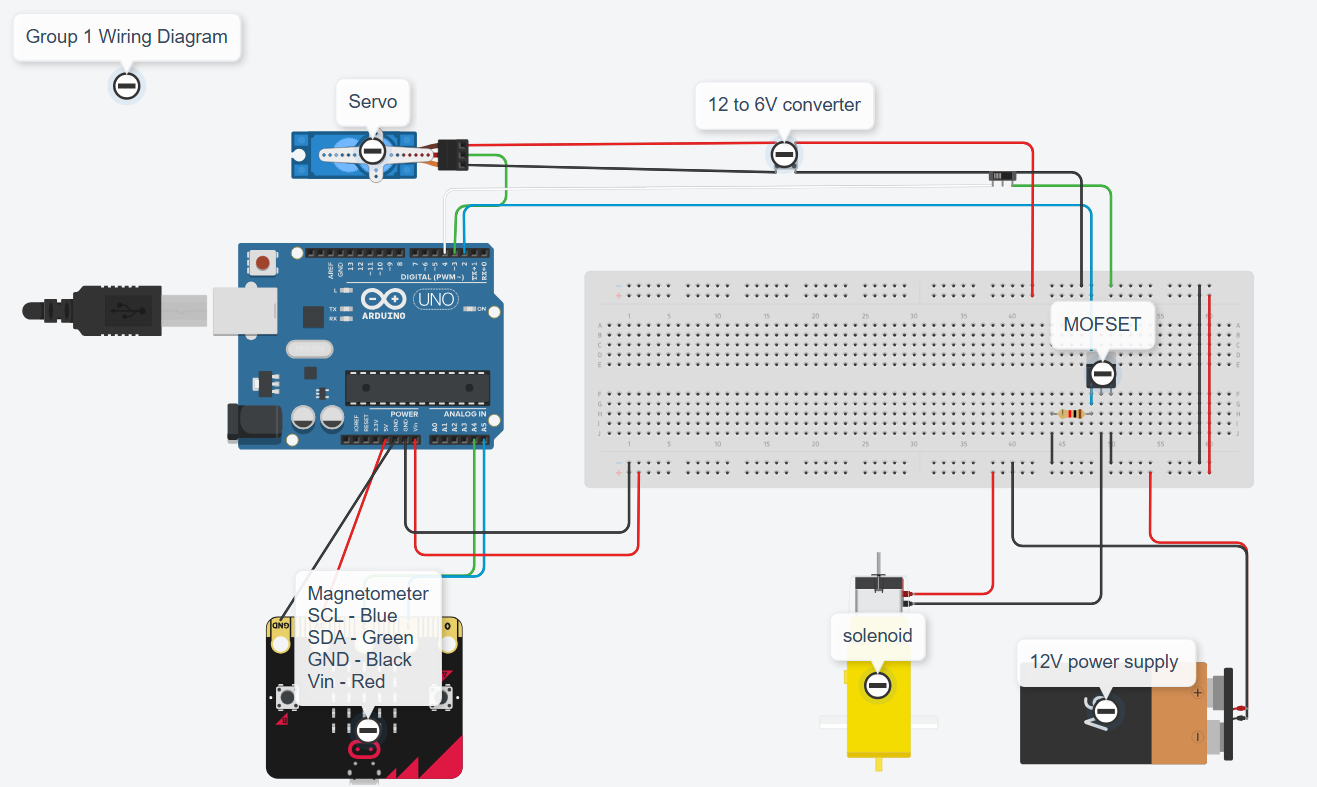
The control system combines a steering servo, magnetometer/IMU heading feedback, wheel-switch distance measurement, and a timed solenoid. The final program sequences straight travel and two 90-degree turns.
Team: Martin Li, Adam Diersing, and Logan Bigler. Logan led CAD and drivetrain design; Adam handled wiring, electrical work, test data, and final code fixes.
Read the team’s final reportTEAM TEST RESULT
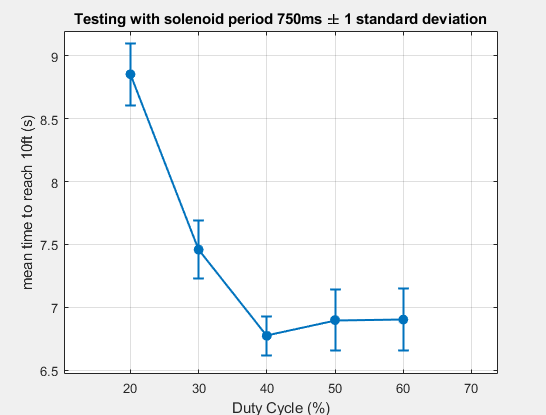
6.77 seconds over 10 feet.
The best tested setting averaged 6.774 s across 10 runs, with a standard deviation of 0.156 s. Tests used a 40% solenoid duty cycle, a 750 ms period, 40 psi starting pressure, and a heading-control gain of 0.6.
This setting also showed the lowest variation among the tested configurations. It was selected for the final program.
Experimental testing and analysis: Adam Diersing. Results describe the team’s robot.
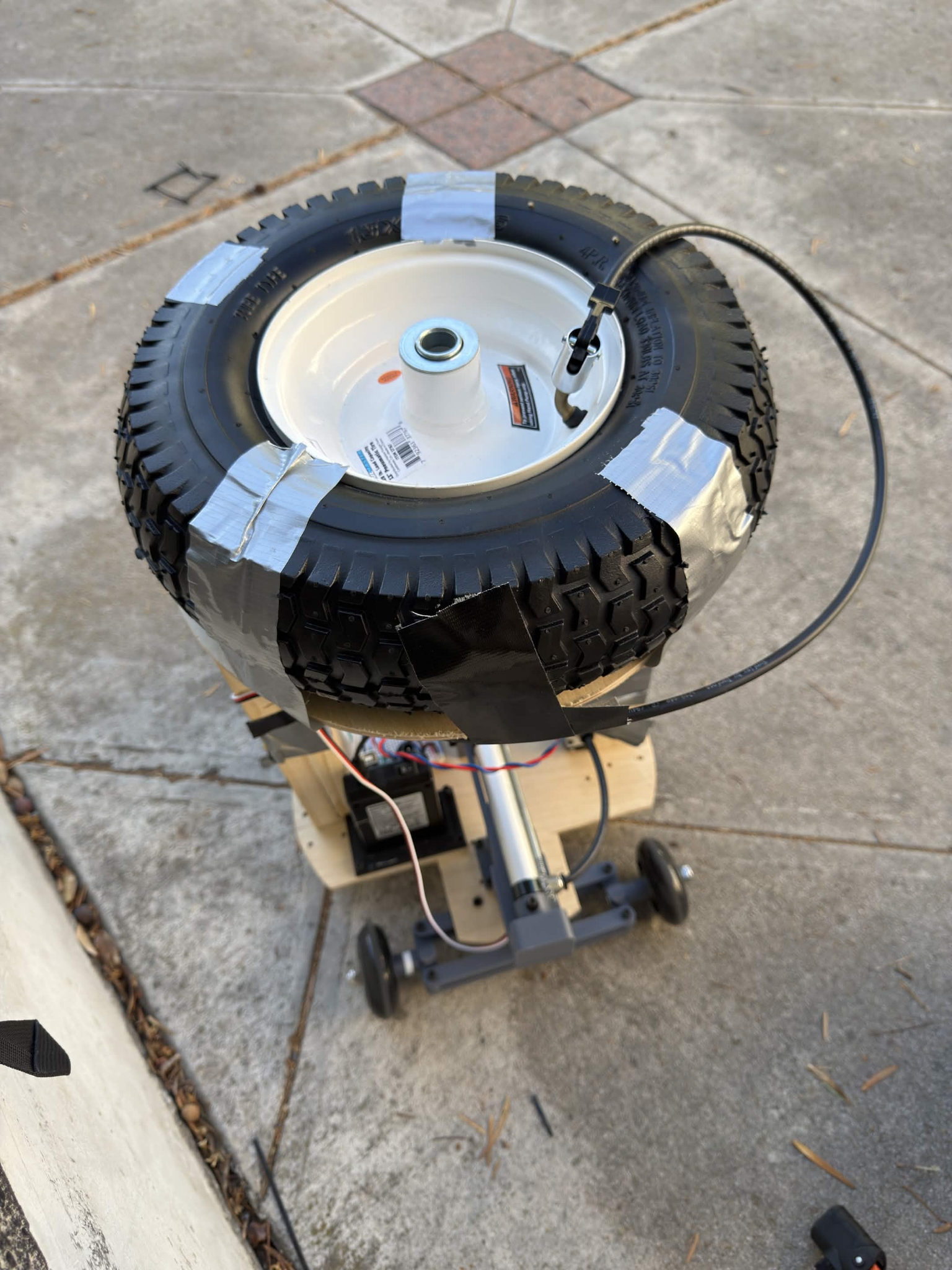
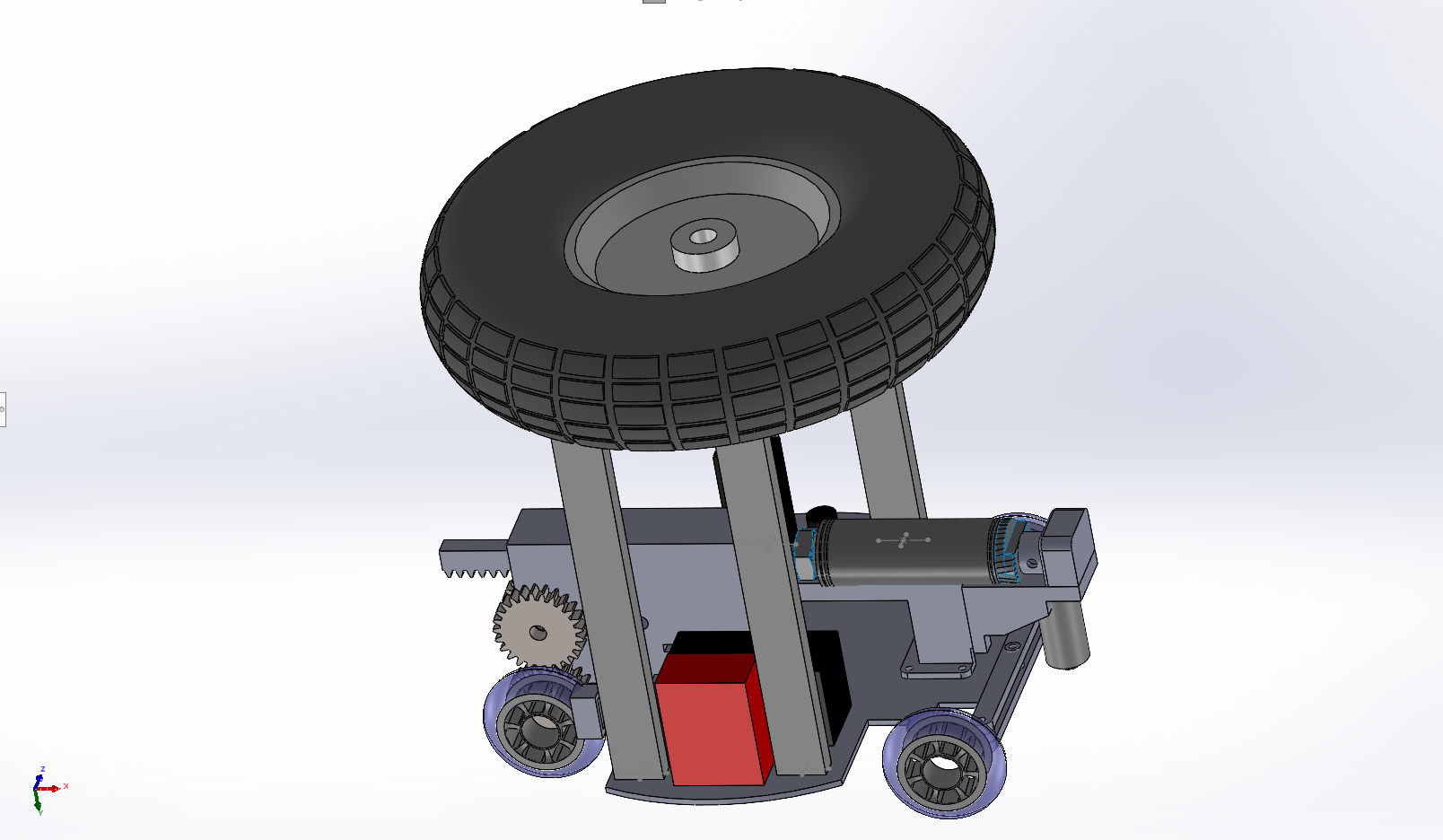
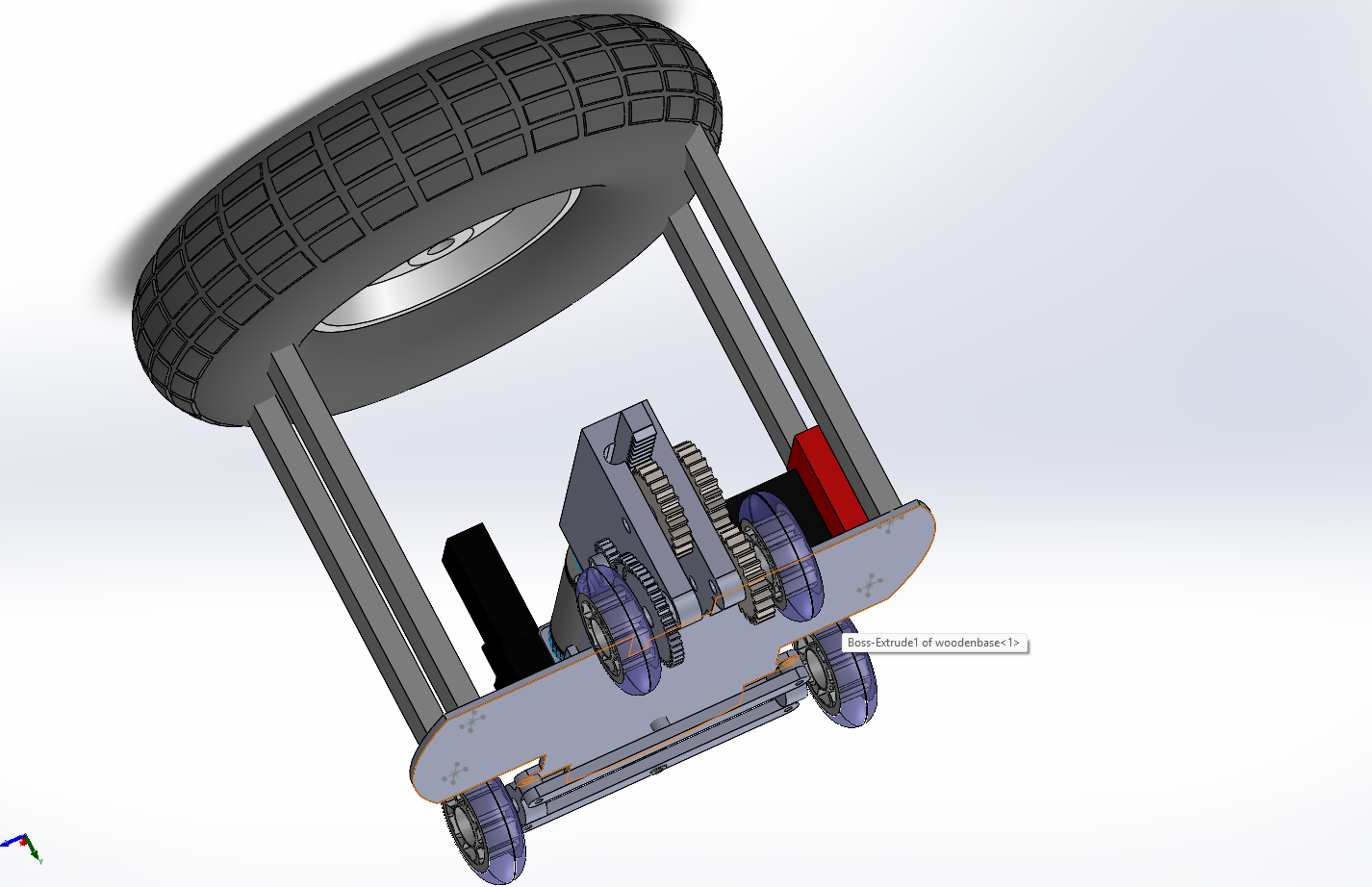
FROM THE PROJECT REPORT
The build, the CAD & the wiring.
Physical hardware and team design documentation from our MAE 106 final report.
02 / EARLIER ROBOTICS WORK
Two-legged running robot.
In a separate UC Irvine project, I led an eight-person team through mechanical design, fabrication, and assembly of a two-legged running robot.
Modeled components and the assembly in SolidWorks, integrated 3D-printed and woodcut parts, and used hand tools, precision fasteners, and fit checks to refine the physical build.